


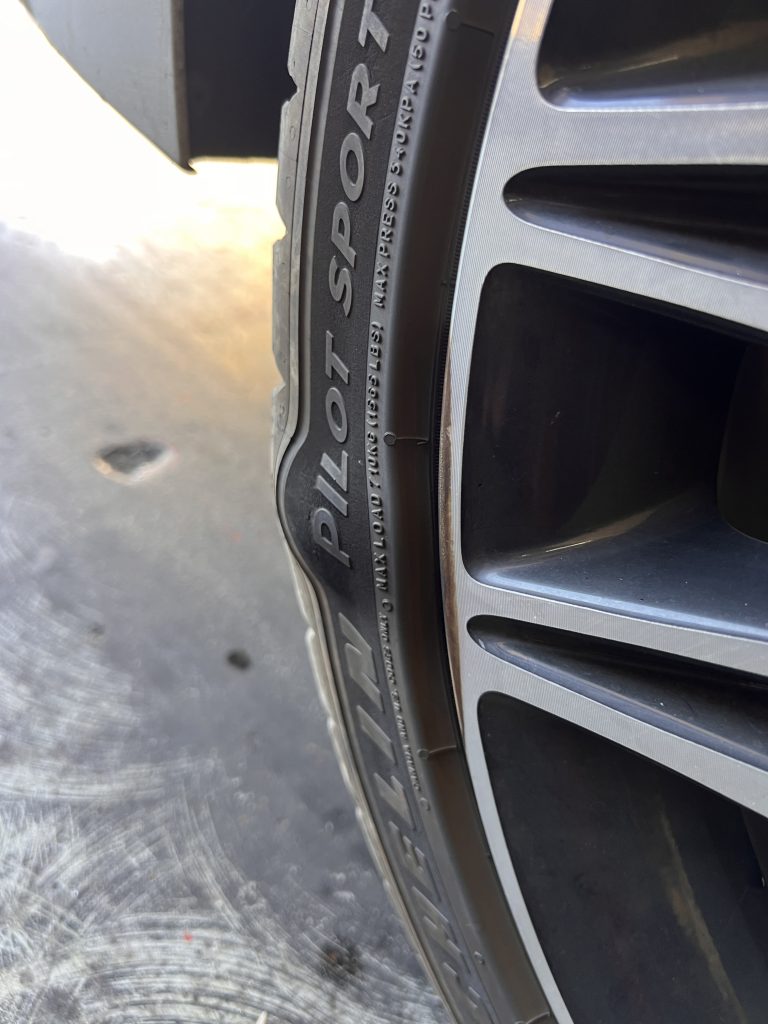
A sidewall bubble on a tyre, sometimes referred to as a tyre sidewall bulge, is one of the most misunderstood forms of tyre damage, largely because it appears suddenly, often without any visible external cause, leading many drivers to assume that the tyre itself is defective.
However, after decades of experience across both tyre manufacturing and retail environments, the reality is far more confronting and far less misunderstood within the industry: the overwhelming majority of sidewall bubbles, easily upwards of 99%, are caused by road use, not product faults, and more specifically by impacts that occur during everyday driving situations that most drivers barely register at the time.
What’s actually happening inside the tyre

To understand why these bubbles form, and why they are so dangerous, you need to look beneath the surface of the tyre, because the real damage is not visible externally and occurs within the internal structure of the tyre itself.
Modern radial tyres are constructed using multiple layers, including:
- The inner liner, which holds air pressure (like a modern inner tube)
- The carcass plies, which provide structural strength
- The sidewall and tread compounds, which allows flexibility and absorbs impacts
The most critical components is the inner liner, as a tyre is nothing more than a high pressure vessel of air or nitrogen. This layer can be compromised due to normal road use no matter how old the tyre may be.
When a tyre experiences a sharp sidewall impact, such as brushing against a curb while parallel parking, striking a pothole at speed, or climbing over a gutter or driveway edge, the force is not always sufficient to visibly cut or mark the outer rubber, but it can be more than enough to pinch, split, or fracture the inner liner and internal cords.
Once that inner liner is compromised, even slightly, pressurised air begins to seep out of its intended chamber and migrate into the surrounding rubber layers, and because the sidewall is the most flexible part of the tyre, that trapped air has nowhere to go, so it forms a visible bulge or “bubble” on the outside.

Why sidewall bubbles are extremely dangerous
A sidewall bubble is not just cosmetic damage, nor is it something that can be monitored or “driven on for a while”, it is a clear indication that the structural integrity of the tyre has already been compromised, and that the internal reinforcement designed to contain air pressure is no longer functioning as intended.
What makes this particularly dangerous is that the weakened area is now under constant stress, especially when the tyre is rotating at speed, flexing under load, and heating up during normal driving conditions, which means that the bubble can rupture suddenly and without warning.
When it does, the result is typically an instantaneous loss of air pressure, often referred to as a blowout, and if this occurs at moderate to high speeds, such as on a freeway, the consequences can range from loss of vehicle control to serious accidents.
Why they’re almost always caused by road use
The misconception that sidewall bubbles are a manufacturing defect largely stems from the fact that there is rarely any visible external evidence of impact, leading drivers to believe the tyre has failed spontaneously.
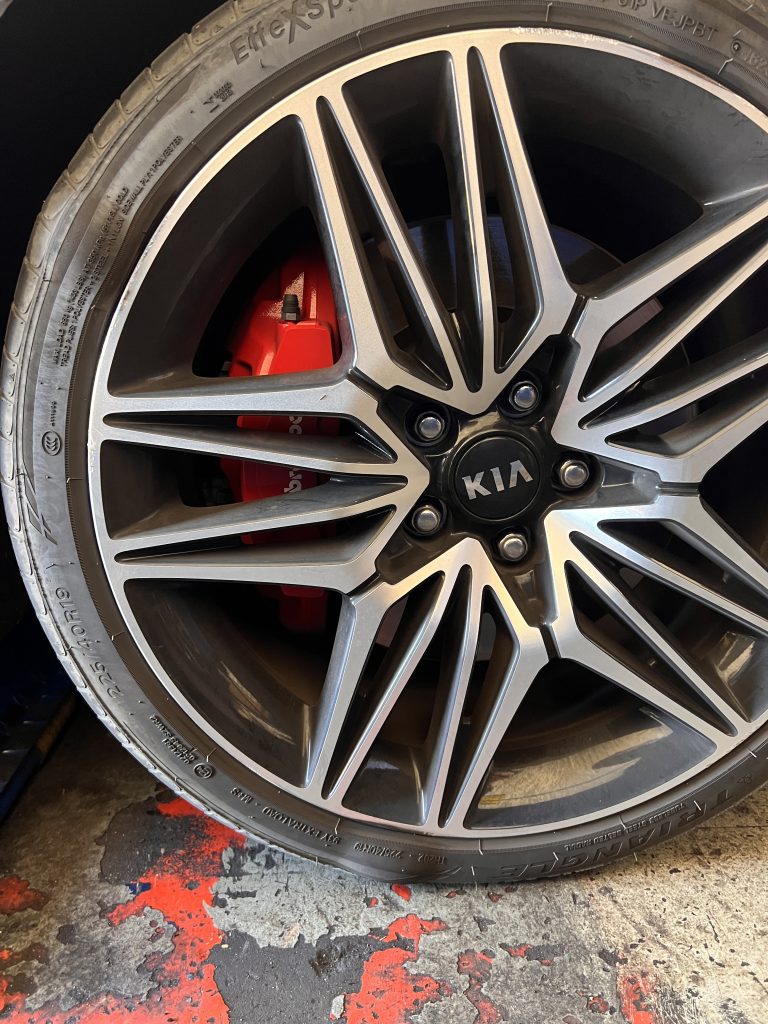
In reality, the types of impacts that cause this damage are extremely common and often go unnoticed, including:
- Road debris strikes
- Light contact with a curb while parking
- Clipping a gutter when turning tightly
- Driving through potholes, especially at speed
- Mounting kerbs or driveway lips
Because the damage occurs internally, the tyre can appear perfectly fine immediately after the incident, only for the bubble to develop hours or even days later as air slowly migrates into the sidewall.
Can a sidewall bubble be repaired?
The short and definitive answer is no.
Unlike a puncture in the tread area, which can sometimes be safely repaired under strict guidelines, sidewall damage is not repairable under any circumstances, because it involves the structural components of the tyre that are essential for safely containing air pressure and supporting the vehicle.
Any attempt to repair a sidewall bubble would be temporary at best and dangerously misleading at worst.
What you should do if you see one
If you notice a bubble forming on your tyre’s sidewall, the correct course of action is immediate and non-negotiable:
- Replace the tyre as soon as possible
- Avoid driving at high speeds or long distances
- If necessary, switch to a spare tyre immediately
Continuing to drive on a tyre with a sidewall bubble is a calculated risk, and one that is simply not worth taking.
Warranty claims and retailer advice
It’s understandable that many consumers, upon discovering a sidewall bubble, particularly on a relatively new tyre, may feel frustrated and consider pursuing a warranty claim, assuming that the product has failed prematurely.
However, in the vast majority of cases, this type of damage will not be covered under manufacturer warranty, because it is classified as impact damage resulting from road use rather than a defect in materials or workmanship.
This is also why tyre retailers will typically recommend replacement rather than inspection for warranty, not because they are trying to upsell or take advantage of the situation, but because they recognise the failure mode immediately and understand the safety risk involved.
In this instance, it’s important to trust that advice and to keep in mind that tyres are sophisticated, carefully engineered components. They are not indestructible and can be compromised by everyday impacts, no matter their age.
The bottom line
A sidewall bubble is one of the clearest warning signs a tyre can give you of a visible symptom of hidden internal damage that has already occurred and cannot be reversed.
While it may be tempting to question how it happened, or to assume a manufacturing issue due to the lack of visible external damage, the reality is that these failures are almost always the result of everyday driving impacts, and the focus should not be on blame, but on safety.
Because when it comes to tyres, the real risk is not the cost of replacement, it’s the cost of ignoring the warning signs.


